
What to pack for seasonal work in the UK
Start with the essentials you need to reach the farm. Then check what will be provided there before buying anything else.
Check the baggage allowance on your ticket: 23 kg is not a universal rule. Power banks go in hand luggage, not in checked baggage.
Prepare in three parts
Use this list as a guide. How much you need depends on the season, laundry facilities and conditions at your farm.
Keep with you
- Passport, documents and contact details for the person meeting you
- Phone, charger and a permitted power bank
- Medicines you need on the journey and ways to pay
Pack in your suitcase
- Layers of clothing and rain protection
- Spare socks, underwear and everyday shoes
- Personal items that meet baggage rules
Ask first
- What work footwear and protective equipment are provided
- Whether bedding, kitchenware and laundry facilities are available
- When you can shop, when your transfer is and when you will first be paid
What should you check before flying?
Before you fly
Passport, journey and phone access
Check your passport and eVisa
Open your UKVI account. Check your passport, personal details and the conditions of your permission; the details held by your carrier must match.
Save your route to the farm
Write down the address, meeting point, time and contact number of the person responsible. Save your ticket and route for offline use; keep a paper copy of important contacts.
Check phone access and payment options
Ask your mobile provider about roaming, and your chosen UK provider about SIM/eSIM compatibility and activation. Check whether your card works in the UK.
Before you shop
Do not buy things that will be provided
Get a list from the farm
Ask for written confirmation of work clothing, footwear, bedding, kitchenware, laundry facilities and shopping trips. A photo of another caravan does not describe your accommodation.
Check your carrier’s rules
Check the weight and dimensions of each bag, connecting flights, liquids and battery restrictions. For power banks, check Wh and the airline’s rules, not just mAh.
Work out your budget until your first pay
Check the pay date and whether an advance is available, and the costs of travel, food, phone service and purchases. Allow extra for delays. There is no single amount that will cover everyone’s needs.
All checklist sections
More detail: choose a topic
Hand luggage: what to keep with you
Keep your passport and travel documents with you, along with your ticket, farm address and contact details for the recruitment operator and the person meeting you. If your baggage is delayed, you will still be able to reach your accommodation and explain where you are going.
Charge your phone before leaving. Take a cable and charger, and save your map, route and important messages for offline use. Do not assume Wi-Fi will be available at every stage of the journey.
Pack medicines you need during the journey and their documentation in your hand luggage, following the rules for carrying them. It is useful to add glasses, personal toiletries and a change of underwear in case your suitcase is delayed.
Power banks and spare batteries must not go in checked baggage. The CAA states a maximum of two power banks per person and prohibits charging the power banks themselves on board. Check any additional restrictions imposed by your airline; if your hand luggage is checked in at the boarding gate, remove the batteries.
Clothing and footwear: layers, rain and laundry
For outdoor work, prepare a waterproof hooded jacket, suitable footwear and several layers: a base layer, a fleece or jumper, and an outer layer to protect against rain and wind. Choose according to the forecast, season and type of work, rather than one piece of advice for the whole country.
Take enough spare socks and underwear to last between washes. Check whether there is a washing machine, how much it costs and where you can dry clothes. Thermal underwear, a hat and gloves may be useful in cold weather; in summer, add a sun hat.
Keep work clothes separate from clothes for travelling and time off. Slippers are useful in your accommodation. Choose footwear that fits and suits the task: ordinary wellington boots do not replace safety footwear if your work requires it.
A warm jacket is not automatically unnecessary. Check the conditions and forecast first. Do not fill your suitcase with duplicates, but do not leave all your clothes shopping until after arrival either: you still need to get to a shop.
Medicines, glasses and help if you are ill
If you take medicines regularly, discuss supplies and continuing your treatment in the UK with your doctor in advance. Bring medicines in their labelled original packaging, with details of the prescription. Do not change your treatment yourself for the sake of the trip.
Ask your doctor or pharmacist whether your medicine contains a controlled drug. Separate import rules apply to these medicines: GOV.UK explains proof of prescription, quantity limits and when you need to contact the DFLU in advance. Do not apply the three-month rule to all medicines.
Do not buy antibiotics “just in case” without a prescription. According to the NHS, antibiotics do not treat colds or flu; a healthcare professional decides whether they are needed. Discuss your choice of painkillers, allergy treatment or decongestants with a pharmacist, taking other medicines into account.
For a personal first aid kit, you can pack plasters and familiar products for treating minor injuries; at work, find out where the first aid kit is and who provides first aid. If you need glasses or contact lenses, bring spares and your prescription details. Eye tests and glasses are not free for everyone.
Find out in advance how to see a doctor while at the farm. Do not wait a week just because an old piece of advice gave that timeframe. In England, you can contact NHS 111 for an urgent problem that is not life-threatening; call 999 for a life-threatening emergency. Access to care and charges vary by UK country and your circumstances.
Registering with a GP does not in itself mean hospital treatment is free. Check the terms of your health insurance, including cover for seasonal work, exclusions and assistance abroad. Save your policy and assistance number if you have taken out insurance.
Chargers, plug adaptor and power bank
Get an adaptor for a British Type G socket and check that your charger is compatible. An adaptor changes the plug connection, not the voltage. Buy from a reputable seller and check the markings, power rating and condition of the casing.
Take a suitable cable and a spare if needed. The number of adaptors depends on your devices: there is no mandatory “2–3 per person” rule. Do not connect faulty devices or exceed the adaptor’s power limit.
For a power bank, check the Wh marking and your airline’s conditions. A “20 000 mAh” label alone does not guarantee that it can be carried. You must not take a damaged or swollen battery on a plane.
Headphones may be useful for calls in shared accommodation, and a torch for walking in the dark. Follow workplace safety rules when using them at work. Before buying a boot dryer, heater or other appliance, check the accommodation rules.
Documents: originals, access and copies
Check that your passport is valid and that you can access your UKVI account before travelling. The passport you are travelling with must be added to the account; your eVisa details and the details held by your carrier must match. A screenshot does not replace checking the record or having a valid document.
Save your CoS (Certificate of Sponsorship) details, contract, letter from the recruitment operator, ticket and accommodation address. If you have only been sent a share code, check whether you can log in to the account yourself. A code for an employer and access to your account are different things.
It is useful to keep secure copies of important documents on your phone and a backup that only you can access. A copy does not replace your original passport. Do not send your passport to a group chat or store your password alongside a copy of the document.
Write down the contact details of the person meeting you and the address on paper in case your phone runs out of battery. If you have an insurance policy and medical prescriptions, keep them separate from checked baggage.
Do not agree to your passport being held against your will. If it is not returned or your freedom of movement is restricted, open the guidance on getting help; call 999 if you are in immediate danger. For concerns about exploitation, you can contact the Modern Slavery & Exploitation Helpline: 08000 121 700. Check the service’s website for opening hours.
Money: budget until your first pay
Ask the recruitment operator when you will first be paid and whether an advance is available. Work out the costs of your transfer, food, phone service, household purchases and anything else you must pay for before payday. Add a reserve for travel or payment delays.
Do not assume £100–150 will definitely cover three or five days. Costs depend on the location, transfer and access to a kitchen and shops. Find out in advance what has been paid for, what will be deducted from your wages and what you need to pay for straight away.
Check whether you can make payments with your card in the UK, and check its limits and fees. Cash may be useful as a backup payment method, but not every service accepts it. Keep money and cards safe, without keeping all your funds in one place.
Compare the final amount you will receive when exchanging money, including fees. Opening a Wise, Revolut or other account depends on your country of residence, documents and verification: having the app does not guarantee a card on the day you arrive. Do not give a false address to register.
Ask the farm first: accommodation and work kit
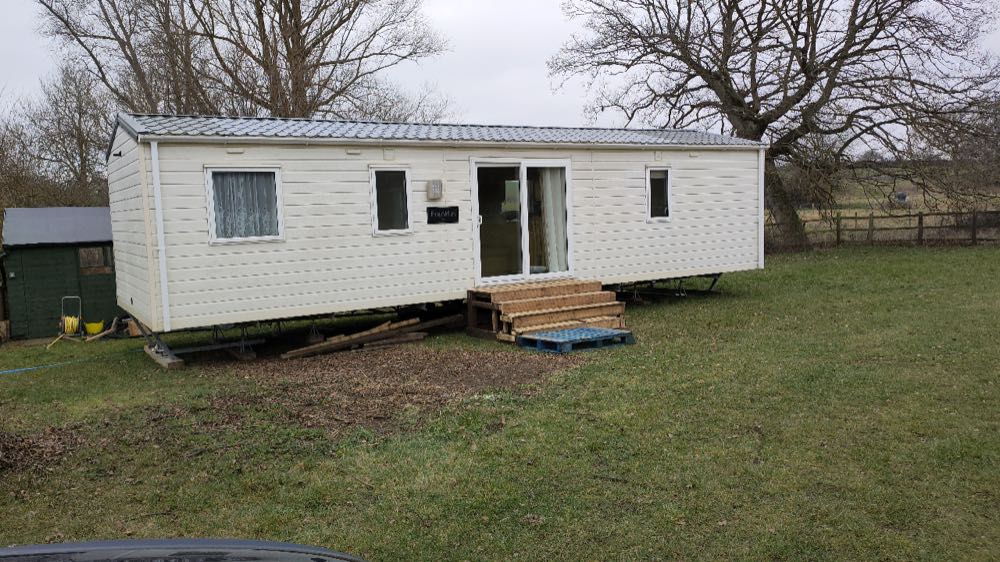
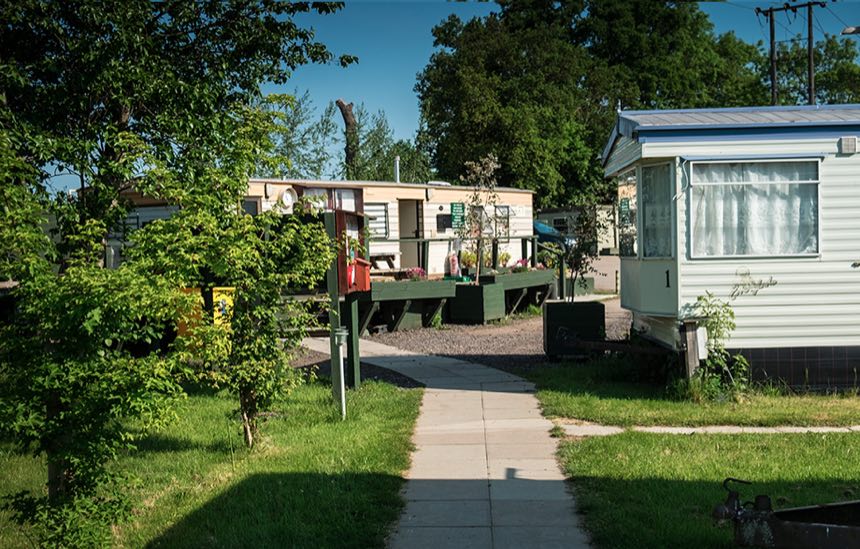
Ask for a list before flying: what footwear and clothing your specific job requires, what is provided and what you are allowed to bring. Do not buy protective gloves or footwear based only on a general online list.
If a workplace risk assessment identifies a need for personal protective equipment (PPE), the employer must provide it free of charge. Ordinary everyday clothing and protective equipment needed for safety are not the same thing.
Ask about bedding, a duvet, pillow, towel, kitchenware and storage space. Decide whether to bring a sleeping bag and kitchen kit based on the farm’s reply, rather than automatically packing them. Conditions in caravans and other accommodation vary; the photos in this section are examples, not a promise of what your accommodation will be like.
Ask about heating, washing and drying clothes, drinking water, shopping trips and parcel collection. If you need to buy something, find out the address with its postcode and who will receive the delivery. Delivery times depend on the item and address.
Arrange food for the journey and until your first shopping trip, but check import rules first. Do not pack tinned meat or dairy products to provide “three days’ food”. Rules for entering Northern Ireland need to be checked separately.
What you can leave at home or buy later
Start by setting aside duplicates, heavy appliances and large packs of household products. Compare excess baggage charges with the cost of buying items after arrival and whether you can get to a shop.
You can buy a towel, bedding, a mug and cutlery locally if you know exactly when you will be able to get to a shop. The word “furnished” does not confirm that every item you need is provided — ask for a list.
For liquids, sharp objects and other restricted items, check the rules at your departure and connecting airports. Restrictions differ for hand luggage and checked baggage.
Do not leave out warm clothing, medicines or comfortable shoes you need just to reduce weight. Pack the essentials for the journey and first few days, and decide on optional purchases after the farm replies.
Shopping after arrival: compare costs and plan the journey
First, find out where the nearest shop is and how to get there. Travel and delivery costs are part of the price too. Compare the size you need, quality and total cost, rather than relying on a promise of “the cheapest in the UK”.
For clothing and household items, you can check Primark, Tesco, B&M and other shops you can reach; for food, try nearby supermarkets, including Aldi and Lidl. Stock and prices change, so old prices of £3 or £8 are not given as a promise.
When buying second-hand electronics or appliances, check their condition, whether they work, the seller and the current returns or warranty terms. An item advertised as free does not mean delivery is free. Do not buy a new phone if yours does what you need.
For online orders, confirm the postcode, recipient’s name, collection point and delivery date with the seller. Do not assume every order can be delivered to every farm within one or two days. First find out what is already in the accommodation and what your employer provides.
Phone: check yours before buying a new one
Check whether your phone is locked to a single network and whether your specific model supports the SIM or eSIM you need. Features vary even between similar models and regional versions. Do not assume every phone from a brand supports eSIM, 5G or contactless payments.
Ask your chosen provider whether you can install and activate the plan before arrival, when charges start and whether you need a UK network. Installing an eSIM profile and starting the plan may be separate steps. If eSIM is not suitable, check physical SIM options or suitable roaming.
Download the maps and translation languages you need, save the contact details of the person meeting you and check access to the email address and phone number linked to your UKVI account. Protect your phone with a passcode; do not give an agent one-time login codes.
Only choose a new phone if you really need one. Compare the official specifications of the specific model, network support, battery and total cost. The brand name alone does not confirm compatibility with eSIM or contactless payments.
Food and baggage: check before packing
Food import rules for Great Britain (England, Scotland and Wales) depend on the country you are travelling from. When travelling from Central Asian countries, you cannot bring in meat and meat products, milk or dairy products; separate exceptions and conditions apply to special categories of food.
Shop packaging does not override the ban. Check the ingredients of tinned foods, sausages, cheeses and travel snacks. There are also separate rules for fruit, vegetables, seeds and other foods. Open the current list before travelling, including any conditions for connecting journeys.
Check the allowance for your specific fare: the number of bags, hand luggage dimensions and weight, checked baggage weight and excess baggage charges. Rules may differ between stages of the journey. Weigh your bag at home and keep documents and batteries accessible.
Frequently asked questions
How many kilograms of baggage can I take?
Your ticket and carrier determine the allowance, not a general packing list. Check the weight, dimensions and number of bags for each stage of your journey; 23 kg is not a universal allowance.
What adaptors do I need in the UK?
Choose an adaptor for a Type G socket and your device from a reputable seller. Check its power rating and compatibility: an adaptor does not convert voltage.
How much money should I bring for the first few days?
Find out when you will first be paid and the costs of your transfer and initial purchases. Add these costs together and allow extra for delays. £100–150 is not guaranteed to be enough for everyone.
Do I need a winter jacket?
Choose according to the season, forecast and work. Layers and rain protection are usually useful; you may need a warm jacket. Do not leave it at home just because of general advice.
Can I bring my own medicines?
Check the rules for your specific medicine with a doctor or pharmacist and your carrier. GOV.UK sets out separate requirements for controlled drugs covering proof of prescription and quantities. You do not need antibiotics without a prescription “just in case”.
Do I need to buy work gloves and boots?
Check the farm’s requirements first. If a risk assessment identifies a need for protection, the employer must provide the necessary PPE free of charge. Ordinary clothing for everyday use is a separate matter.
Can I activate an eSIM at home?
This depends on the provider, plan and specific phone. Check profile installation, activation and when charges start separately; arrange a backup way to stay connected.
Where should I pack my power bank?
In hand luggage, not checked baggage. Check Wh, the number allowed and the airline’s rules; the CAA states a maximum of two per person. Do not travel with damaged batteries.
Can I bring tinned meat or cheese?
When entering Great Britain from Central Asia, meat, meat products and ordinary dairy products are prohibited. Exceptions apply to some special foods; check GOV.UK. Northern Ireland has separate rules.
Sources and useful guidance
- CAA: packing safely for your flight
- GOV.UK: medicines containing controlled drugs
- NHS: when antibiotics are needed
- NHS: healthcare for visitors to England
- Electrical Safety First: safe travel adaptors
- GOV.UK: travelling with an eVisa
- Unseen: help with exploitation
- HSE: employers provide the protective equipment needed
- GOV.UK: bringing food into Great Britain
- GOV.UK: fruit, vegetables and seeds