
Farm accommodation: what to check and ask
Moving in or already living on a farm? Check the cost, facilities and who to contact about repairs.
A look at accommodation and daily life
 More about this farm
 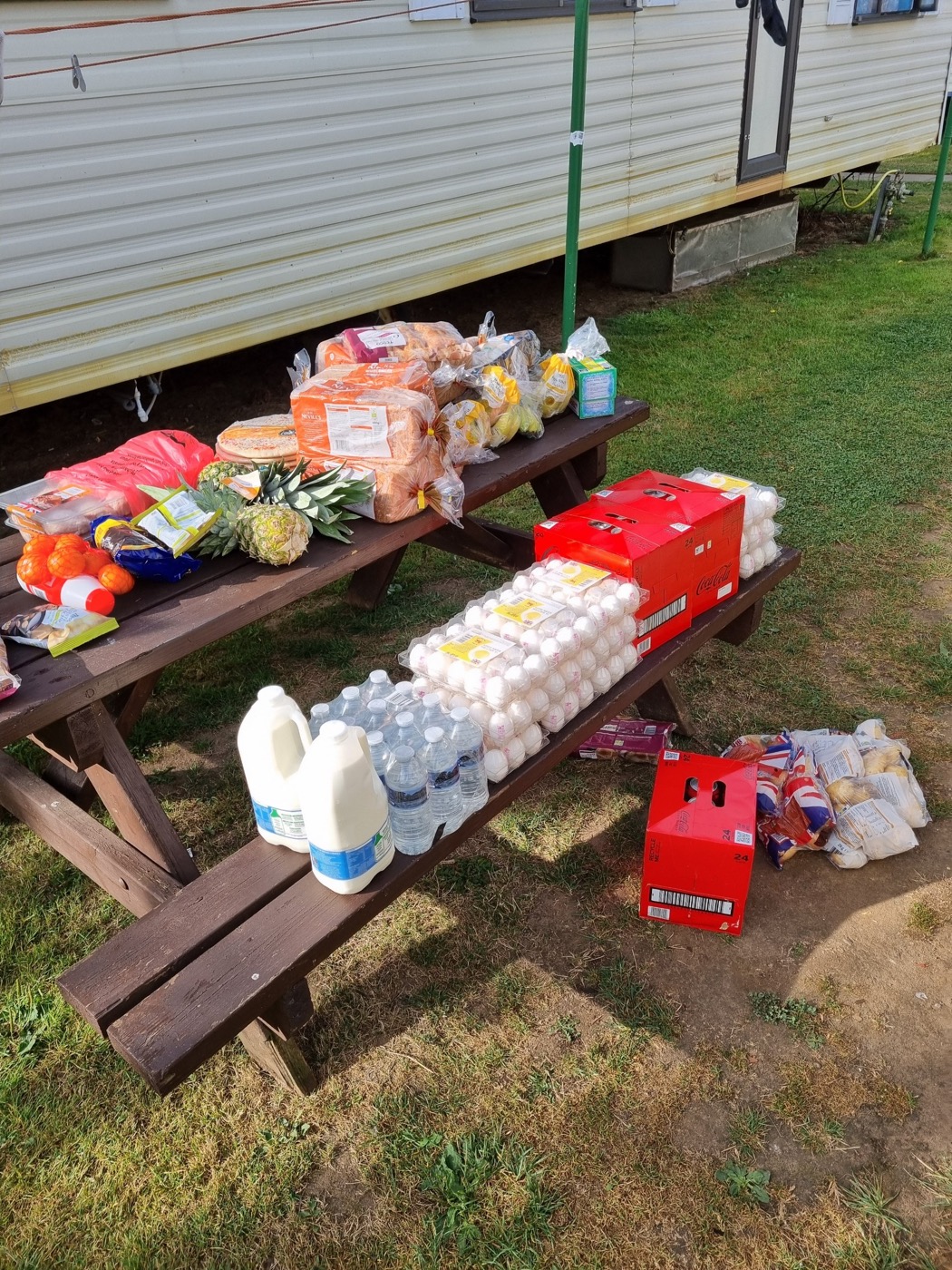 More about this farm
 These photos show specific farms. They do not confirm current conditions or show what every farm is like.
When you move in, check
- The accommodation cost and what it includes: electricity, heating and internet.
- The shower, toilet, kitchen, locks and storage space. Photograph any faults.
- The contact for repairs and what to do if the accommodation or deductions differ from what was agreed.
Checked . First published: 6 April 2026.
What accommodation costs and what is deducted
Ask for a written breakdown before paying or before the first deduction. “Accommodation £100 a week” does not explain whether heating, electricity, laundry and internet are included. Compare the total for the same period and for one person, rather than the price of a whole caravan with the price of a bed space.
- Separate the payments. List the accommodation price, days charged, utilities, deposit, transport and one-off purchases separately. Check who receives the money: the farm, the scheme operator (licensed recruiter) or another owner; what you pay directly and what is deducted from wages.
- Keep the supporting documents. Keep the accommodation agreement, consent to deductions, list of included services and receipts. Ask whether you are charged on days without shifts, during illness and after work ends; get specific dates when charges start and stop.
- Check against your payslip. Check the days of accommodation, rate and separate amounts. If they differ, write to payroll — the department that calculates pay — and the person responsible for accommodation, attaching your agreement and calculation. Ask for an explanation, not just a new total.
- If there is no reply or the amount is disputed, involve your scheme operator. To check minimum pay, collect your hours and earnings; then use independent help contacts and the official pay complaint form. Do not stop paying rent without advice on your situation.
£11.10 a day, or £77.70 for seven days, is the accommodation offset from April 2026. This figure is used to check minimum pay where an employer provides accommodation. It is not a universal rent cap or a required caravan price. If the charge is higher, the excess may reduce the pay counted towards the minimum wage. GOV.UK rules and examples.
A simplified example, not a calculation of your pay. A worker aged 21 or over earns £508.40 for 40 hours counted: £12.71 × 40. Accommodation is provided for all seven days and costs £100. The amount above the offset is £100 − £77.70 = £22.30. This leaves £486.10 for the minimum wage check, or about £12.15 an hour — below £12.71.
The example has no other payments or deductions. You cannot simply subtract any rent from wages and compare the remainder with the minimum: the accommodation's connection to the employer, days provided, hours and calculation rules matter. How to check your pay; how to read deductions and tax.
What to check when you move in
Record the initial condition on your first day. This helps you get repairs and resolve deposit questions when leaving. Online photos of another farm can give you an idea of the place, but do not replace inspecting your own accommodation and getting written terms.
- Get documents and contact details. Write down the address and postcode, caravan or room number, the name of the person responsible for repairs, the emergency contact and your scheme operator's contact. Ask for a copy of the agreement: price, deposit, house rules, guests, moving out and how the accommodation is linked to your job.
- Inspect your accommodation. Check the bed, mattress, locks, windows, shower, toilet, hot water, heating, kitchen and fridge. Look for damp, mould, leaks, damaged sockets, a clear exit and the smoke and carbon monoxide alarms required for the accommodation. Do not test faulty equipment yourself.
- Make a dated inventory. Photograph damage and shared areas with the residents' agreement; do not photograph other people's belongings or people unnecessarily. Record accessible meter readings and the number of keys. Send your observations to the responsible person and ask them to confirm receipt.
- Agree on repairs. For each fault, ask for a deadline and a safe temporary solution. If there is no responsible person or a serious problem is ignored, send the inventory to your scheme operator. The next step is help with repairs and safety.
Ask how many people share the kitchen and shower, where to dry clothes, how laundry is paid for and where to put rubbish. Check phone reception, the route to where your shift starts and transport to a shop. These daily details affect costs and rest, even if they are not in a short advert.
An inventory you have sent is more useful than photos kept only on your phone: it shows when the responsible person learned about the problem. If you disagree with the owner's inventory, list the differences in writing; do not confirm that everything works when it does not. Keep a copy outside the work app.
No heating, leaks or mould: how to get a solution
If there is an immediate threat to life — a fire or another dangerous situation — move to a safe place and call 999. Send ordinary repair requests to the person responsible for accommodation and your scheme operator. If your health gets worse, seek medical help; photos do not replace a doctor's assessment.
- Describe the specific fault. Give the address, room number, what is not working, when you noticed it and how it affects living there. For heating, record the time and temperature if you have a thermometer; for damp, record the location, size of the patch, leaks and photo dates.
- Write to the responsible person. Ask them to acknowledge your report, arrange repairs and offer a safe temporary solution. Keep the date, recipient's name and reply. After a phone call, send a short written summary.
- Involve your scheme operator if the problem is not being resolved. Send the history of your reports, state how urgent it is and ask them to check conditions, arrange repairs or consider other accommodation. Do not buy unsafe heaters or repair gas appliances or wiring yourself.
- Seek an independent assessment. The local council and its housing or environmental health team can advise on the checks that apply to the accommodation's condition. To find the council for your address, use the local council search; in Northern Ireland, use the council directory. Explain that you live in a caravan or accommodation linked to work: the service's powers depend on the type of accommodation.
Example message: “Hello. The heating in caravan [number, address] has not worked since [date]; [description]. I reported it to [person, date], but it has not been fixed. I have attached photos and a record of my report. Please confirm when it will be repaired and a safe temporary solution. You can contact me at [contact]”.
Mould can have different causes: ask for the source of moisture and ventilation to be checked, rather than just painting over the patch. Follow safe ventilation instructions, but do not accept without a check that the problem is automatically your fault. Keep records of damage to belongings and expenses if there are any.
Do not withhold rent or deduct repair costs yourself without advice: this could lead to a rent arrears dispute. If you face threats for complaining, control over your documents or coercion, use the worker help channels. The type of agreement affects your rights, but is not a reason to stay in immediate danger.
When work ends: accommodation, leaving and final deductions
Your shifts, employment contract and right to stay in the accommodation may end on different dates. Do not automatically assume you can stay until your visa expires, or that a verbal demand to leave today is always enough. For accommodation linked to work and caravans, the process depends on the agreement and actual circumstances.
- Confirm the dates in writing. Check when work ends, when you must leave, which days you will be charged for and what notice is required. Send the demand to leave to your scheme operator. If you have nowhere to sleep, say so straight away.
- Check your next accommodation. For a transfer, get the address, move-in date and travel arrangements from your scheme operator. If there is a dispute about leaving, urgently show the documents to a housing adviser; do not automatically apply ordinary flat rental rules to your accommodation. For England, see Shelter's explanation of accommodation linked to work.
- Record the handover. Remove your belongings, compare the condition with the inventory and photograph the accommodation and accessible meters. Ask for a joint inspection, confirmation that you returned the keys, the date charges stop and a written list of any claims against you.
- Check the final calculation. Ask for your deposit back, final utility bills and a payslip with a breakdown of deductions. For each disputed deduction, ask for the basis and evidence; refer unresolved issues to your scheme operator and an adviser. For a protected tenancy deposit, use the scheme's procedure where it applies.
Leave a safe contact for returning money and keep documents after leaving. Separately check your final wages, holiday pay and P45 using the work guide. Do not sign confirmation of money you have not received; if a document is unclear, ask for time and an explanation.
If you are at risk of losing your accommodation, contact the local housing service and a specialist adviser. Available help depends on the part of the UK, immigration status and circumstances; contacting them does not guarantee a flat. Mention any children, illness, disability or immediate danger.
A room or flat: private renting reference guide
First identify the part of the UK and the type of accommodation. Ordinary private renting, a room in the owner's home, a caravan and accommodation needed for work may have different rules. The document's title does not always decide this: the terms and actual living arrangements matter.
In England, Section 21 was abolished from 1 May 2026 for private assured tenancies covered by the reform. There are transitional cases and exceptions. This is not one rule for the whole UK or all farm accommodation. Official reform guidance.
Open the reference guide contents
Where to find accommodation
Start with an area from which you can realistically reach work for the start of your shift, and a full budget. Before changing address, seasonal workers need to discuss transport and accommodation terms with their scheme operator: finding a room does not arrange a transfer to another job.
| Channel | What to use it for and what to check |
|---|---|
| SpareRoom | Finding rooms. Check who you will live with, included bills, the minimum stay and the advertiser's right to let the room. |
| OpenRent | Rental adverts, including direct from owners. Check identity, documents and the terms of the specific offer. |
| Rightmove and Zoopla | Comparing flats, houses and areas. If an agent is involved, check their contact details and authority; this does not mean every fee can lawfully be charged to the tenant. |
| Facebook Marketplace and Telegram chats | Community contacts and private adverts. A familiar language or shared group does not prove the right to let accommodation or guarantee your money back. |
Save the advert before it is removed. Ask for the full address, who the agreement is with, which rooms and services are included, the move-in date and payment arrangements. Compare the answers with the document before sending money; do not rely only on a voice message.
How to compare prices between cities and budget for the first month
Old price ranges do not show what is available today. Collect several recent adverts for the same type of accommodation, note the date and compare monthly rent plus bills and travel. To convert a weekly price to an average monthly price, use the amount × 52 ÷ 12, not simply × 4.
| Search area | What to add to the advertised price |
|---|---|
| London: centre and outer areas | Transport zones, journey cost and time, and whether you can reach an early shift. Compare rooms with the same bills included. |
| Manchester and Birmingham | Actual distance to work, night transport, utility costs and local Council Tax. |
| Leeds and Sheffield | Postcode, available routes, accommodation condition and total cost. A city's name does not confirm a particular rent level. |
| Edinburgh and Glasgow | The same costs, but Scottish agreement and deposit rules. Do not automatically use England's five-week limit. |
Hypothetical example for England: rent of £600 a month and a permitted five-week deposit. Deposit = £600 × 12 ÷ 52 × 5 = £692.31. First month plus deposit = £1,292.31. This is an arithmetic example, not a room price in a specific city or a required amount for every deposit.
Separately add moving costs, food until payday and bills that are not included. If a holding deposit has already been credited towards rent or the main deposit, do not add it again. In England, for new agreements covered by the reform from 1 May 2026, rent in advance is accepted after signing, usually for a maximum of one month; for weekly payments, check the separate limit in the GOV.UK guidance. Do not try to solve a lack of credit history by offering to pay 3–6 months upfront.
Documents, credit history and Right to Rent
Ask for the document list before paying: identification, proof of income, references from a previous landlord or employer, and sometimes a credit check or guarantor. Having no UK credit history does not mean automatic refusal; ask which alternative evidence the specific owner will accept. Do not share your banking password.
Right to Rent is an immigration check on the right to rent accommodation in England. It uses a different share code from the one for work. If you have an eVisa, use the official proof service. Scotland, Wales and Northern Ireland do not use England's Right to Rent check.
If you have an ARC — an asylum registration card, do not treat it as automatic proof of the right to rent privately in England. A Home Office Landlord Checking Service check may be needed. Explain your circumstances to a specialist adviser; asylum support accommodation and private renting have different processes. Official document checking rules. Do not rely on an old universal move-out deadline after an asylum decision: read your personal notice and seek help in good time.
Viewing — what you must check
- Damp and condition: corners, areas near windows and behind accessible furniture, the bathroom, signs of leaks and smells. Ask what work has already been done and what will still be fixed.
- Heating and water: ask to see the system working, and check hot water and pressure. Check the heating type, controls and who pays for energy.
- Safety: locks, windows, exit routes and alarms. For private rentals where the rules apply, check gas and electrical safety documents; requirements differ between types of accommodation.
- Daily life: number of residents, kitchen, bathrooms, food storage, noise, internet and mobile reception. Check the journey to work at the time you need to travel.
- Terms: exactly what is being let, who owns it, payment amount and period, deposit, notice to leave and access arrangements for repairs. Ask for promised repairs to be recorded in your messages.
In England, many properties have EPC — Energy Performance Certificate — requirements, usually at least E, but there are exceptions. Do not apply this to every caravan. Check whether the rules apply using the safety guidance and energy efficiency rules. No visible damage does not replace the required equipment checks.
Deposit: limits, protection and return
A tenancy deposit secures your obligations under the tenancy; a holding deposit is a separate amount to reserve accommodation before the agreement. In England, where the Tenant Fees Act applies, the main deposit is limited to five weeks for annual rent below £50,000 and six weeks for £50,000 or more. A holding deposit is a maximum of one week. Current guidance for tenants.
Deposit protection depends on the part of the UK and type of agreement. Where applicable in England and Wales, the approved schemes are DPS, MyDeposits and TDS; the money must usually be protected and information provided within 30 days. Ask for the scheme name and registration details, and confirm them on its website. Not every farm accommodation deposit must be in such a scheme.
- When moving in, make an inventory and send your observations to the owner. Keep payment confirmation showing the purpose as “deposit” and the amount.
- Before leaving, agree an inspection, return the keys with confirmation, take photos and record meter readings.
- Ask for the deposit back and a written calculation of proposed deductions with evidence. Damage and fair wear and tear are different; compare the initial and final inventories.
- If there is a dispute, use the scheme's procedure if the deposit is protected, or get advice for your type of accommodation. Keep track of deadlines, letters and replies.
For a protected deposit, under GOV.UK rules repayment is due within ten days after agreeing the amount, not automatically ten days after moving out. If protection was required but is missing, there may be legal ways to claim the money and compensation; the amount and outcome are not guaranteed. See the separate rules for Scotland and Northern Ireland below.
Bills: Council Tax, energy, water, internet and TV Licence
“Bills included” needs a breakdown: which bills, whether there is a usage limit and who pays any excess. Do not assume all bills are included with a room, or necessarily separate with a flat.
| Payment | What to find out before signing |
|---|---|
| Council Tax | Who is legally responsible for payment under your living arrangements, the property's band and the council's charge. In some cases the owner is responsible; in others, the residents are. |
| Gas and electricity | Meter, opening readings, tariff, standing charge — a fixed charge — prepayment and contract terms. Do not choose a supplier only on a promise to be “the cheapest”. |
| Water | Whether there is a separate meter and bill, and who sets up the account; rules and inclusion in other charges depend on the part of the UK. |
| Internet | Connection cost, speed, contract length, early termination charges and the owner's permission for installation. |
| TV Licence | Needed to watch or record live TV on any service and to use BBC iPlayer. Check whether an existing licence covers your address and living arrangements. |
Responsibility for Council Tax depends on the circumstances. A 25% discount may apply where there is one adult who counts for Council Tax, but you need to apply for it. A household where everyone is a qualifying full-time student is usually exempt; one student in a mixed household does not automatically make the whole home exempt.
Northern Ireland has domestic rates instead of Council Tax: who pays in rented accommodation. Check the licence cost and exact coverage at TV Licensing; do not use an old fixed monthly price for your budget. If you only watch other on-demand services, check the exceptions on the same website.
Tenant rights: England, Wales, Scotland and Northern Ireland
Identify the type of agreement before calculating the notice period or how to challenge a demand to leave. Rules on the owner's access, repairs, deposit protection and ending a stay cannot be reduced to one UK-wide set.
- England: a new system applies from 1 May 2026 to private assured tenancies covered by the reform, and Section 21 has been abolished. To end such a tenancy, the owner needs applicable grounds and must follow the procedure; cases started earlier may have transitional rules. Rooms with a resident owner and other excluded accommodation types differ. Identify the tenancy type and check the reform.
- Wales: the Renting Homes system uses occupation contracts — agreements for living in a property. Check the written statement of terms, repairs and grounds for ending the contract in the GOV.WALES guidance. England's abolition of Section 21 is not guidance for Wales.
- Scotland: private renting has its own rules on agreements, notice and disputes. The deposit is usually limited to two months; where applicable, it must be paid into an approved scheme within 30 working days of the tenancy starting. Official guidance on deposits and exceptions; protection and exceptions.
- Northern Ireland: separate rules apply to private renting, deposits and domestic rates. From 1 April 2023, the limit is one month's rent, with an exception for agreements made before that date; protection and information have their own deadlines. Check dates, conditions and exceptions on nidirect; transitional exception for earlier agreements.
For ordinary renting in England, inspections or repairs usually require at least 24 hours' notice and a reasonable time, except in emergencies. The right to quiet enjoyment does not mean all lawful access is banned. Do not apply this as a universal condition to a caravan agreement. Private renting rights and responsibilities.
Repairs to structures and systems, gas and electrical safety, alarms and protection from discrimination are governed by the applicable rules. If there is a problem, first record it and report it to the owner, then to the housing service or an adviser. It is not correct to say every resident can only be evicted with a court order: the type of accommodation matters.
For England: Shelter, telephone 0808 800 4444; for Wales — Shelter Cymru, for Scotland — Shelter Scotland, for Northern Ireland — Housing Rights. Further advice — Citizens Advice. Choose the service for your part of the UK and check how to get help.
Scams: what to check before paying
Pressure to “pay now or lose the room” is a reason to stop. But not every holding deposit before an agreement is a scam: where applicable, it is a lawful reservation payment with an amount limit and refund rules. First check the accommodation, recipient, purpose and payment terms.
- Deposit before a viewing: ask for a safe way to view, proof of the advertiser's authority to let it and written terms. Someone else's photos and a video call alone do not prove the right to let the property.
- Unusually low price: compare recent similar adverts, and check the address, room type and hidden bills. A low price is a reason to check, not automatic proof of fraud.
- Owner “abroad”: their location does not settle the issue, but a promise to send keys after a payment to an unknown person is dangerous. Verify the agent through an independent official contact.
- No written terms: ask for them and keep messages and payment records. A lack of paperwork makes evidence harder, but does not automatically mean you have no rights.
Before paying, independently confirm the recipient and bank details, especially if a message suddenly changes them. A payment with a clear purpose and receipt is easier to trace. If you have already sent money and suspect fraud, contact your bank immediately through an official channel, save the advert and messages, report it to the platform and follow the reporting process recommended by the bank or police.
Frequently asked questions
Can I rent without a credit history?
It is possible, but the decision and checks depend on the owner and type of tenancy. Ask whether proof of income, references or a guarantor will be accepted. For new agreements in England covered by the reform from May 2026, you cannot get around the advance rent limit by offering to pay 3–6 months at once.
Documents and checksHow much do I need for the first month?
Add rent, the applicable deposit, moving costs and bills that are not included. A hypothetical example: £600 a month plus a five-week deposit of £692.31 gives £1,292.31. This is not a market price or a universal requirement for every agreement. Do not add a holding deposit again if it has already been credited.
How to calculate your budgetWhat is Council Tax?
It is a local tax on housing in England, Wales and Scotland. Who pays, discounts and exemptions depend on the living arrangements. A household where everyone qualifies as a full-time student is usually exempt; one student does not automatically exempt everyone. Northern Ireland has domestic rates.
Bills and responsibilityCan I rent with an ARC?
An ARC alone is not universal proof of the right to rent privately in England. A Home Office Landlord Checking Service check may be possible; the result depends on your status. Seek specialist advice and distinguish between private renting and asylum support accommodation.
Document checks on GOV.UKHow do I get my deposit back?
Keep the initial inventory, photos when leaving, confirmation that keys were returned and the payment record. Ask for the refund amount and evidence for deductions. For a protected deposit under GOV.UK rules, the ten days start after the amount is agreed; if there is a dispute, use the scheme's procedure. Protection is not automatic for farm accommodation.
Deposit returns and disputesIs £11.10 a day the maximum caravan charge?
No. It is the accommodation offset for checking minimum pay where an employer provides accommodation, not a universal rent cap. For seven days it is £77.70. Where the charge is higher, the excess may reduce the pay counted; to check, you need earnings, hours and days of accommodation.
Offset calculation exampleWhat should I record on move-in day?
The address, room or caravan number, responsible people's contacts, price and included services. Photograph existing damage, make an inventory, record keys and accessible meter readings. Send your observations to the responsible person and keep confirmation, not just your own photos.
Four steps when moving inWho should I contact if there is no heating or mould appears?
Write to the person responsible for accommodation with the address, dates and description, asking for repairs and a safe temporary solution. If there is no reply, involve your scheme operator, then the local housing or environmental health team. In an immediate threat to life, call 999; if your health gets worse, see a doctor.
How to report a faultCan I stop paying because conditions are poor?
Do not stop paying or deduct repairs yourself without advice on your agreement: you could build up arrears. Record faults, ask for a solution in writing, and involve your scheme operator and the housing service. Immediate danger needs separate urgent help.
How to ask for helpMy work has ended — must I leave the same day?
This cannot be determined from the date of your last shift alone. The deadline and procedure depend on the part of the UK, type of accommodation and terms linking it to your work. Ask for a written demand and show it to your scheme operator and an adviser. If you have nowhere safe to sleep, say so straight away.
When work ends and you move outMust every farm accommodation deposit be protected?
There is no universal rule for every farm and caravan. You need to identify the part of the UK, agreement and actual type of accommodation. Ask about how the deposit is held, returned and deducted from. If protection is required but missing, get advice on available claims; compensation is not automatically guaranteed.
When deposit protection appliesCan Section 21 still be used for eviction in England?
From 1 May 2026, Section 21 was abolished for private assured tenancies covered by the reform. Transitional rules may apply to cases started earlier. This does not describe every type of accommodation and is not the rule for Wales, Scotland or Northern Ireland; identify your agreement first.
Renting reform: GOV.UKIs a holding deposit before an agreement a scam?
Not necessarily. Where applicable in England, a reservation payment of up to one week's rent is allowed, with rules on refunds or crediting it towards other payments. But pressure, an unverified recipient or a refusal to show the accommodation mean you should stop and check the facts. A holding deposit is different from rent in advance and the main deposit.
What to check before payingCan accommodation and utilities be deducted from my final wages?
Ask for the basis of each deduction, the period, rate and calculation under the agreement or consent. Check the move-out date, meters, direct payments and payslip so you do not pay twice for the same thing. Tell payroll and your scheme operator about any disputed amount, then get independent advice.
Checking the final calculationPhotos help you get to know a place. The farm directory does not confirm current prices or available accommodation: get the terms in writing from your scheme operator.